




By Dawn De Busk
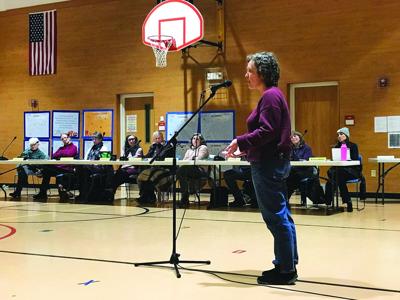
FRYEBURG, Maine — The MSAD 72 Board voted on Feb. 12 to approve revisions to the district’s Instructional and Library-Media Materials Policy, establishing what happens when a library book is challenged by a student’s family.
kAmpE E96 H:56\C2?8:?8 >66E:?8 2E |@==J ~4<6EE $49@@= :? uCJ63FC8[ D6G6C2= G:6HA@:?ED H6C6 AC6D6?E65 C682C5:?8 H96E96C 2 DEF56?E D9@F=5 92G6 F?76EE6C65 2446DD E@ 3@@<D 2?5 @E96C >2E6C:2=D 2E E96 D49@@= =:3C2CJ]k^Am
kAm$@>6 A2C6?ED 2?5 2 >:?@C:EJ @7 E96 D49@@= 3@2C5 >6>36CD 36=:6G6 E92E 46CE2:? 3@@<D D9@F=5 36 32??65 7C@> E96 =:3C2CJ :7 E9@D6 3@@<D :?4=F56 D6IF2= 4@?E6?E[ 86?56C :DDF6D[ 8C2A9:4 G:@=6?46 2?5^@C AC@72?:EJ[ D2J:?8 E9@D6 3@@<D >:89E ?@E 36 286\2AAC@AC:2E6 7@C D@>6 DEF56?ED]k^Am
kAm|62?H9:=6[ @E96C A2C6?ED 2?5 3@2C5 >6>36CD DFAA@CE E96 4@?46AE @7 2== 3@@<D C6>2:?:?8 :? E96 =:3C2CJ] %96J ECFDE E92E D2768F2C5D 2C6 :? A=246 E@ AC6G6?E 49:=5C6? 7C@> 4964<:?8 @FE 2 3@@< E92E :D HC@?8 7@C 9:>^96C]k^Am
kAm&=E:>2E6=J[ E96 |$ps fa q@2C5 A2DD65 2 C6G:D65 A@=:4J 7@C x?DECF4E:@?2= 2?5 {:3C2CJ\|65:2 |2E6C:2=D E92E DEC6?8E96?D 2 DE2E6>6?E 7@C :?E6==64EF2= 7C665@> 2?5 6DE23=:D96D 2 4@>>:EE66 E@ G6E 492==6?865 3@@<D @?6 2E 2 E:>6] u@FC 3@2C5 >6>36CD G@E65 282:?DE :E[ 72G@C:?8 2 >@C6 3=24<\2?5\ H9:E6 2AAC@249 E@ <66A:?8 49:=5C6? 7C@> 3@@<D E96J 4@?D:56C 92C>7F=]k^Am
kAm|6>36CD @7 E96 AF3=:4 DA@<6 2E E96 368:??:?8 @7 E96 >@?E9=J 3@2C5 >66E:?8] “x 2> 96C6 E@ DFAA@CE :?E6==64EF2= 7C665@> 2?5 E96 49@:46 @7 6249 A2C6?E[” D2:5 y@6 |4r2:?[ E96 72E96C @7 EH@ DEF56?ED :? E96 5:DEC:4E] “x 5@?’E H2?E >J 49:=5 36:?8 C6DEC:4E65 3642FD6 @7 D@>63@5J 6=D6]”k^Am
kAmqFE %C:D9 qFC?6== @7 s6?>2C< 5:D28C665[ D2J:?8 E92E H9:=6 D96 28C66D E92E A2C6?ED D9@F=5 92G6 2 49@:46[ >2<:?8 DFC6 E92E DE277 7@==@H E9C@F89 H:E9 E96 A2C6?ED’ C6BF6DED :D?’E 2=H2JD 2 C62=:EJ] “t>2:=D 8@ F?2EE6?565] !2C6?ED 86E AFD965 E@ E96 D:56] x’G6 8@E H@C5 7C@> D@ >2?J A2C6?ED[ D2J:?8 E96J 92G6 D6?E 6>2:= 27E6C 6>2:=” H:E9 ?@ C6A=J[ qFC?6== D2:5]k^Am
kAm“uC665@> :D 2 8@@5 E9:?8] (6 2== H2?E :E] qFE 5@?’E AFD9 E9:?8D @? 6G6CJ@?6] %96 DE277 5@6D?’E 92G6 E:>6 E@ >@?:E@C 6G6CJ 49:=5] *@F 2C6 D2J:?8[ ‘{6E’D AFE >@C6 3FC56? @? @FC =:3C2C:2?D[’ ” qFC?6== D2:5] “x7 J@F H2?E J@FC 49:=5 E@ C625 2 3@@< 2?5 :E :D 286 :?2AAC@AC:2E6[ 8@ 86E :E 2?5 E2<6 :E 9@>6 J@FCD6=7] xE D9@F=5?’E 36 :? @FC =:3C2CJ E92E E2IA2J6CD A2:5 7@C]”k^Am
kAm!C:@C E@ E96 G@E6[ |$ps fa 3@2C5 >6>36C {:D2 %9@>AD@? @7 qC@H?7:6=5 C625 2 HC:EE6? DE2E6>6?E E92E D2:5i “x 2> ?@E 4@?G:?465 E92E H6 ?665 E@ C6G:D6 E96 A@=:4J] x?E6==64EF2= 7C665@> >2<6D :E >@C6 5:77:4F=E 7@C 2 A2C6?E E@ 92G6 2 D2J] |2?J A2C6?ED 92G6 4@?46C?D 3FE 5@?’E DA62< @FE 3642FD6 @7 762C @7 324<=2D9 E@ E96> @C E96:C 49:=5C6?] |2?J H@F=5 @776C 2=E6C?2E:G6 65F42E:@? E@ AC@E64E E96:C 49:=5 7C@> 36:?8 :?EC@5F465 E@ 2 4@?46AE E92E E96 49:=5 5@6D?’E 92G6 >6?E2= 23:=:EJ E@ F?56CDE2?5[” D96 D2:5[ 255:?8 E92E AC:G2E6 D49@@=D 2C6 ?@E 2=H2JD 277@C523=6k^Am
kAm%9@>AD@? 4:E65 ?682E:G6 :>A24ED[ DF49 2D AC@>:D4F:EJ :? =2E6C J62CD[ 7C@> 49:=5C6? C625:?8^G:6H:?8 >2E6C:2=D 562=:?8 H:E9 D6I E92E 2C6 ?@E 286 2AAC@AC:2E6 7@C E96>] $F49 3@@<D D9@F=5 36 <6AE @FE @7 DEF56?ED’ 92?5D 2?5 @77 =:3C2CJ D96=G6D[ D96 D2:5] %96 7C665@> H@F=5 36 6IE6?565 E@ A2C6?ED E@ 7:?5 E96 32??65 4@?E6?E 6=D6H96C6]k^Am
kAm“!2C6?ED H9@ H2?E E96:C 49:=5 E@ 36 6IA@D65 E@ DF49 DF3;64ED 92G6 E96 @AE:@? @7 FD:?8 E96 AF3=:4 =:3C2CJ] (6 D9@F=5 ?@E 36 :? E96 AC24E:46 @7 @G6CC:5:?8 A2C6?E2= C:89ED[” D96 D2:5]k^Am
kAmq@2C5 >6>36C $2G2??29 $6DD:@?D @7 {@G6== 5:D28C665] “pD 2 =:3C2C:2?[ x <?@H E96C6 :D ?@ 6G:56?46 E@ DFAA@CE >2?J @7 E96 4=2:>D J@F >256] %96C6 :D 2 =@E @7 6G:56?46 E92E D9@HD 49:=5C6? H9@ 92G6 2446DD E@ >2E6C:2=D C625:=J 2G2:=23=6 56G6=@A 4C:E:42= E9:?<:?8 D<:==D[ 2?5 56G6=@A 2 ?2EFC2= 4FC:@D:EJ]”k^Am
kAm“}@E9:?8 :? E96 =:3C2CJ :D C6BF:C65[” D96 D2:5] “%96C6 :D ?@ C6BF:C6>6?E E@ E2<6 @FE 2 46CE2:? 3@@<] %96 8@2= @7 E96 =:3C2CJ :D E@ AC@G:56 286\C6=6G2?E >2E6C:2=D E@ DEF56?ED]” $6DD:@?D D2:5 D96 AC676CD E96 E6C> “286\C6=6G2?E” E@ “286\2AAC@AC:2E6[” 3642FD6[ D96 D2:5[ “6G6CJ3@5J’D 9@FD69@=5 92D 2 5:776C6?E :562 @7 H92E 2AAC@AC:2E6 :D]k^Am
kAm“x7 49:=5C6? 2C6 3C:?8:?8 >2E6C:2=D 9@>6 E92E A2C6?ED 5@?’E =:<6[ E92E @A6?D FA 2? @AA@CEF?:EJ 7@C 4@?G6CD2E:@?[” D96 D2:5]k^Am
kAmp?@E96C 3@2C5 >6>36C[ r2?5:46 |4t=C@J[ 2=D@ BF6DE:@?65 E96 C6A6C4FDD:@?D %9@>AD@? =:DE65 2D 2 C6DF=E @7 C625:?8 4@?E6?E E@@ J@F?8] “x H@F=5 2=D@ 492==6?86 D@>6 @7 E96 G6CJ 3C@25 4=2:>D E92E H6C6 >256 :? E92E DE2E6>6?E 23@FE >2E6C:2=D E92E H6C6 6IA=:4:E=J 49@D6? 3J EC2:?65 AC@76DD:@?2=D 7@C 6=6>6?E2CJ 2?5 >:55=6\D49@@= 49:=5C6?[” D96 D2:5]k^Am
kAmuCJ63FC8 3@2C5 C6AC6D6?E2E:G6 $2C29 ~H6?D D2:5 E92E D96 4@?D:56CD 96C 9@FD69@=5 E@ 92G6 2 566A 72:E9] “|J 49:=5C6? 92G6 ?6G6C 3C@F89E >2E6C:2=D 9@>6 E92E x 7@F?5 @3;64E:@?23=6] %96J 92G6 3C@F89E E9:?8D 9@>6 E92E 42FD65 5:D4FDD:@?] qFE ?6G6C 2?JE9:?8 x E9:?< D9@F=5 36 C6>@G65 7C@> E96 D49@@= =:3C2CJ[” ~H6?D D2:5]k^Am
kAmq@2C5 >6>36C t=: v@@5H:? @7 uCJ63FC8 AC@G:565 2? 6I2>A=6 @7 H92E 4964<:?8 @FE E96 HC@?8 =:3C2CJ 3@@< 42? 5@] “x 925 7C:6?5D E92E 8@E :?E@ wF?E6C $] %9@>AD@? 2?5 364@>6 A@E9625D[” v@@5H:? D2:5]k^Am
kAm!2CE @7 2 ?6H=J 25@AE65 D49@@= A@=:4J 6DE23=:D96D H92E E2<6D A=246 H96? 2 =:3C2CJ 3@@< :D 492==6?865] ~?=J @?6 3@@< 2E 2 E:>6 42? 36 C6G:6H65]k^Am
kAmv@@5H:? D@F89E E@ 2>6?5 E96 A@=:4J E@ C6G:6H EH@ 3@@<D 2E 2 E:>6]k^Am
kAm“~?6 3@@< 2E 2 E:>6 E@ 36 492==6?865 — E92E :D C:5:4F=@FD] x H@F=5 2>6?5 E96 A@=:4J D@ E92E :E :D EH@ 3@@<D 2E 2 E:>6[” 96 D2:5] w@H6G6C[ ?@3@5J D64@?565 E96 >@E:@?]k^Am
kAm$6DD:@?D ?@E65 E92E A2CE @7 E96 C6G:6H AC@46DD :D C625:?8 E96 6?E:C6 3@@<]k^Am
kAm“(6 42? C62=:DE:42==J 8:G6 @?=J @?6 2E 2 E:>6 E96 E9@F89E7F= 4@?D:56C2E:@? :E 56D6CG6D[” D96 D2:5]k^Am
kAm“%96 WA@=:4JX 4@>>:EE66 H:== C625 E96 3@@< :? :E 6?E:C6EJ] ]]] (6 2C6 ?@E =@@<:?8 2E @?6 @C EH@ A286D 2 A6CD@? 92D 2? :DDF6 H:E9] (6 92G6 E@ =@@< 2E E96 3@@< 2D 2 H9@=6[” D96 D2:5]k^Am
kAm|4t=C@J D2:5 :E H:== E2<6 D@>6 E:>6 E@ G6E 2 3@@<]k^Am
kAm“p 4@>>:EE66 H@F=5 92G6 E@ 36 4@?G6?65[ H9:49 :?4=F56D 2 E62496C 7C@> E92E 8C256 =6G6=] %96C6 :D?’E 2 4@>>:EE66 2C@F?5 H2:E:?8 7@C 2 492==6?86 E@ 8@ E9C@F89] $@[ :E H:== E2<6 D@>6 E:>6 E@ AFE E@86E96C 2 4@>>:EE66[” D96 D2:5]k^Am
kAmt2C=:6C :? E96 6G6?:?8[ 2 >2? H9@ D2:5 96 H2D 2 A2C6?E DFAA@CE65 =@@<:?8 2E @?=J @?6 3@@< 2E E:>6 2?5 92G:?8 2 DECF4EFC65 2?5 @C56C=J AC@46DD :? A=246] “~?6 3@@< 2E E96 E:>6 D@ 2== A2C6?ED 42? 36 962C5] }@E 2 CFD965 C6DA@?D6j 2 E9@F89E7F= 24E:@?[” 96 D2:5]k^Am
kAm“xE :D >J F?56CDE2?5:?8 E92E C6DEC:4E:?8 >2E6C:2= 7@C J@FC @H? 49:=5C6?[ J@F 42? D6?5 2? 6>2:= E@ E96 D49@@=[” 96 D2:5] “%9:D H:== AC6G6?E E96 ?665 E@ 492==6?86 2 3@@< 2E 2==[ H9:49 C6>@G6D E96 3@@< 7@C 2== DEF56?ED] x 9@A6 A2C6?ED 564:56 E@ @AE @FE :?DE625 @7 7@C3:55:?8 E92E 3@@< 7@C 6G6CJ@?6]”k^Am
kAmk6>m|2?28:?8 t5:E@C |2C82C6E |4z6?K:6 4@?EC:3FE65 E@ E9:D 2CE:4=6]k^6>mk^Am


(1) comment
Balancing Parental Rights, Professional Judgment, and Evidence in School Library Policy
Applying Disciplined, Non-Emotional Evaluation
As someone who has been passionate about reading since childhood and now as a parent, navigating these issues proves challenging. My approach focuses on applying a disciplined, non-emotional framework: trust parents, trust professionals, trust the process—but verify each claim, harm, safeguard, and decision pathway. This echoes Ronald Reagan’s “trust but verify” philosophy, which advocates for a careful balance between honoring individual freedoms and ensuring responsible public oversight.
Trust, Verification, and Responsible Governance
In the context of the MASD 72 article, Reagan’s “trust but verify” principle supports the notion that parents, educators, and librarians each have a valid role. However, no one should act on unchecked assumptions or untested claims. He would trust parents to guide their children’s reading, librarians to curate collections suitable for various ages, and school boards to uphold community standards. At the same time, every claim of harm, request for restriction, and procedural safeguard must be verifiable, documented, and based on evidence rather than emotion. Trusting parents means empowering them to shape their child’s experience, but verifying fairness ensures that one household’s standards do not become mandatory for all students.
Reagan’s perspective advocates policies that protect intellectual freedom, require evidence for harm claims, and rely on transparent, neutral guardrails. This approach ensures public institutions serve all families without yielding to ideological pressures from any single group.
Challenges for Parents in Navigating School Libraries
The article highlights the tension: parents feel responsible for their child’s moral and developmental boundaries, but often lack the tools, time, or training to fully understand or evaluate library collections. For parents wanting to make specific, defensible, passage-based claims about a school library book, the challenge is real—the library landscape is vast, professionalized, and constantly changing.
A practical solution begins with situational awareness, not by reading every book, but by using structured, high-leverage methods like those used by librarians. These include reviewing professional summaries (such as those from School Library Journal or Common Sense Media), using library catalogs with preview features, completing challenge forms that require referencing specific passages, and requesting curated lists from librarians that align with family values or concerns.
Building Knowledge and Making Informed Decisions
For parents new to this process, there are clear pathways to build knowledge without becoming full-time researchers. They can start by identifying their main concerns—such as sexual content, violence, profanity, worldview, religious alignment, or developmental readiness—and then use tools designed for non-experts: age-banded review sites, librarian-recommended “read-alikes,” publisher summaries, and parent-facing guides that flag sensitive themes.
Many school libraries provide digital catalogs with filters for reading level, genre, and content notes. Parents can request a “values-aligned preview list” from librarians, ask about books commonly checked out at their child’s grade level, or use opt-out mechanisms to restrict certain titles while learning more. This creates a constructive loop: parents gain awareness, librarians receive clearer expectations, and schools avoid broad, ideologically motivated bans. The result is a governance model where parents can make informed, precise claims, and the community preserves intellectual freedom while respecting diverse moral frameworks.
Welcome to the discussion.
Log In
Keep it Clean. Please avoid obscene, vulgar, lewd, racist or sexually-oriented language.
PLEASE TURN OFF YOUR CAPS LOCK.
Don't Threaten. Threats of harming another person will not be tolerated.
Be Truthful. Don't knowingly lie about anyone or anything.
Be Nice. No racism, sexism or any sort of -ism that is degrading to another person.
Be Proactive. Use the 'Report' link on each comment to let us know of abusive posts.
Share with Us. We'd love to hear eyewitness accounts, the history behind an article.